The Anniversary That Never Left

It Still Happened

I’m big on anniversaries. Timelines in my life matter. I realize that’s not the case for everyone, and that’s okay. In fact, that’s part of the beauty of life. The things that carry weight for me might not carry the same weight for someone else. Differences keep life interesting. If we all thought the same way, the world would be painfully vanilla.

But there’s a difference between seeing things differently and dismissing how someone feels.

When someone discounts my feelings simply because they don’t feel the same way… well, that’s where I take issue. My feelings matter. Yours do too. Respecting that difference is part of being human.

Before I go further, a small housekeeping note. Much of what I’m about to say will remain vague and somewhat cryptic. Certain details cannot be discussed openly for legal reasons. But the emotions that have surfaced from this event cannot be ignored, and today feels like the right time to acknowledge them.

When I wake up tomorrow, it will mark three years since my life quite literally turned upside down.

I was driving to work that morning, just a block away from my home. Out of nowhere, a driver struck my Jeep and flipped it upside down. One moment I was heading to work like any other day. The next moment, the world was inverted and nothing would ever feel quite the same again.

To this day, I don’t know if I was unconscious or for how long. What I do know is that somehow I managed to unhook my seatbelt. Using a strange hand–hand–foot–foot crawl, I worked my way toward the door. A bystander—someone who must have been sent straight from Heaven—helped drag me out onto the street.

I still think about that person.

The specifics of the accident itself aren’t something I can discuss. What I can talk about is everything that followed.

Physically, I was fortunate. It could have been much worse. I sustained a traumatic brain injury, scattered focal matter in my brain, occipital neuralgia, nerve damage in my hand and right foot, and daily migraines that seem to park themselves behind my right eye. My brain is now monitored regularly through mapping for stroke activity.

But I keep going. That’s simply my nature. Surrendering to pain has never been part of my operating system.

And yes, people remind me constantly that it could have been worse.

“Be grateful you’re not dead.”

I am grateful. Beyond grateful. I know how close the margin was.

But gratitude and struggle can exist in the same space.

I still live with the reminders every single day. Loud sounds can make my heart race. Careless drivers can send me into a spiral. Night terrors make sleep something I dread instead of welcome.

And then there’s the spiritual side of it all.

For a long time, I believed God was watching over me that day. I even went to speak with the pastor at my church about it, hoping for some sense of understanding. His response was simple and flat: maybe I was just lucky.

That conversation hit harder than he probably realized. Add in the lingering feelings about how Jake was treated during his First Holy Communion, and somewhere along the way my connection to the Catholic Church quietly slipped away.

I suppose faith, like trust, can fracture.

The larger point in all of this is simple: just because an injury isn’t immediately visible doesn’t mean it isn’t real. Just because someone survives doesn’t mean they aren’t still fighting battles every day.

I was raised to believe you shouldn’t judge someone until you’ve walked a mile in their moccasins. These past three years have reminded me just how true that saying really is.

Because of some of the reactions I’ve experienced, I’ve drawn inward. I’ve grown quieter. There are days when a “why bother” attitude creeps into my outlook on life.

I’ll still write. These blogs remain my outlet. But I rarely share the deepest parts of how I feel anymore.

After the crash, I was required to meet with a therapist. To be fair, some of the techniques helped immensely with the brain injury and navigating work again. I only missed three weeks because of brain swelling and vision difficulties. For that, I was grateful.

But when it comes to the emotional side of things? That switch feels like it was flipped off somewhere along the road.

I’ve learned a lot about people over these past three years—their reactions, their perspectives, their ability to empathize… or not.

And that’s okay. We are all different.

But somewhere in the middle of all those differences, you lost me.

Because the truth is this:

Part of me did die that day.

But the rest of me is still here… learning how to live with what survived.
Spartan Up!

Many people know the story of how I found Spartan training and racing. What they may not know is just how profoundly it changed my life. I can honestly say I will never return to my pre-Spartan days. Back then, my path was paved with shoulda… woulda… couldas.

Today, I look at things differently. I lean into my strengths and face whatever obstacle is thrown my way. And if there’s a way through it, I’ll find it.

Today I returned to the Spartan arena—not as a racer, but as a volunteer at a race held in New York’s legendary Citi Field. Each year I sign up to work an obstacle, cheer on fellow racers, and give a little something back to an organization that gave my life the jumpstart I never knew I needed.

The alarm rang at 3:15 a.m. By 4:15 a.m. my pal Sha Sha and I were headed into the city. We were the first two to arrive at the volunteer tent. After signing in, we grabbed our red volunteer shirts and hoodies for the day. Those red shirts are important—they let every racer know exactly who to turn to when they have a question, need help, or just need a little encouragement.

Before long we were stationed between the Weighted Burpee obstacle—15 burpees with a 55-pound weight for the gents or 33 pounds for the ladies—and my domain, the Multi Rig. Picture rows of hanging rings that racers must traverse, hand over hand, until they smack a cowbell signaling completion.

Simple in theory.

Not so simple after 15 weighted burpees.

As you can imagine, racers arrived at my obstacle already wiped out. I greeted them with a bullhorn and as much encouragement as my lungs could muster. If someone needed a breather, I guided them off to the side. Some people wanted to chat. Some ignored me and powered straight through. Everyone handles a challenge in their own way.

Then one racer tapped me on the shoulder.

“Can I talk to you for a second?”

He looked me straight in the eye and said quietly, “Look… I can’t do this anymore. This is insane.”

I paused for a moment, took a breath, and held his hand.

“Nothing we do in life is easy,” I told him. “One day you’ll have a bad day at work. Another day your child might get sick. Some days you’ll just want to throw in the towel. That’s what these obstacles are. Each one represents a different piece of adversity.”

He told me this was his first race.

I pointed down the course and explained that there were only five more obstacles after mine. When he crossed that finish line, he would be a Spartan forever. He might never race again—but he would always know what it meant to be one.

He gave me a fist bump and headed off down the line.

About an hour later, I was chasing a section of my obstacle flooring that the wind had decided to launch into orbit. Suddenly I felt a hand on my back.

It was him.

He held up his medal, kissed it, and said, “I am a Spartan because of you.”

I smiled and shook my head.

“No pal—that’s all you. Every time you believe you can… Spartan Up and you will.”

We hugged and he jogged off into the crowd.

And that, my friends, is the magic of the arena.

Wherever your race through life takes you, remember who you are and what you’re capable of. Obstacles will show up when you least expect them. Some will knock the wind out of you. Some will make you question whether you belong in the race at all.

But the finish line is always there for those who keep moving.

So dig deep, keep going, and when life throws a wall in front of you—

Spartan Up… and don’t ever let yourself down.

Ah, What the Hell…

Part of a gym workout—whether it’s CrossFit or any HIIT program—is a run. Usually a tidy little block: 400 meters, 800 meters, maybe a spicy 1000 if the coach is feeling particularly cheerful that day.

Now anyone who has read the entire Kiki Box Set of blogs already knows that my left knee is basically shredded. A medial and lateral meniscus tear, plus a healthy helping of arthritis, has been tagging along with me for years like a barnacle on the bottom of a boat. My orthopedist and I are on a first-name basis at this point. He won’t operate yet because I’ve built up my quads so much that the knee is still functioning well enough. So every year we kick that knee-replacement can a little farther down the road.

My mom had both knees replaced in her 60s, so I’m probably on the clock.

Not ready yet.

Anyhoo…

Last week at the gym I stared at the workout on the whiteboard.

There it was.

400m run (2x).

I stared again. It stared back. I swear I heard that little spaghetti-western flute whistle right before the gunfight.

In the past 11.8 years of gym life, I’ve always hopped on the Assault Bike or the rower and cranked out the run equivalent. Everyone knew the drill.

Kiki doesn’t run.

I power walk and hike every Spartan and Tough Mudder race—every single one. I run at the end to jump the fire and cross the finish line, but the other 5 to 16 miles are all power hikes.

Well.

Last week that changed.

I ran.

This morning I rolled into the 7:30 class only to see the same workout format—but now the run was inserted into two stations.

Cue the spaghetti western music again.

Enter Kiki.

Our girl was doing it again.

It was 38 degrees and misty. Black snow still dotted the streets from the last storm. My breath was coming out in hot clouds, but I was chugging along.

And then the WayBack Machine pulled up.

It took me to 1978.

Thirteen-year-old me and my friend Jean Daly were running through the streets of Bethpage during a Saturday cross-country practice. We were bored, and we happened to be near Jean’s house, so naturally we stopped in.

Jean’s mom decided this was the perfect moment to whip up pancakes.

I remember saying, “But… we’re running?”

Her mom waved us off. “Oh, just take a break.”

So there we were.

Two runners.

And Mrs. Butterworth.

To this day I have no idea how we managed to eat pancakes, get back out the door, and run all the way up to the Junior High School in time to finish practice—but somehow we did.

I started giggling out there on the road. It’s funny where the WayBack Machine will take you.

Eventually it dropped me back at the gym.

I wrapped up the workout with 500 meters on the rower and some sled pushes and pulls, feeling pretty good about the whole situation.

And that’s when it hit me.

For years I told myself I didn’t run anymore.

Turns out that wasn’t exactly true.

Maybe I’m not fast. Maybe my knee sounds like a bowl of Rice Krispies some mornings. But every once in a while, when the whiteboard throws down the challenge and the spaghetti western music starts to play, there’s still a little runner hiding in there.

And sometimes the only response left is the one that’s served me well for decades:

Ah, what the hell. Let’s run.

🏃‍♀️🏃‍♀️🏃‍♀️🏃‍♀️🏃‍♀️🏃‍♀️🏃‍♀️🏃‍♀️🏃‍♀️🏃‍♀️🏃‍♀️🏃‍♀️🏃‍♀️🏃‍♀️🏃‍♀️🏃‍♀️🏃‍♀️🏃‍♀️

Copyright 2026 © mobileorderforkaren All rights reserved. No part of this work may be reproduced, distributed, or transmitted in any form or by any means, including photocopying, recording, or other electronic or mechanical methods, without the prior written permission of the author.

🏃‍♀️🏃‍♀️🏃‍♀️🏃‍♀️🏃‍♀️🏃‍♀️🏃‍♀️🏃‍♀️🏃‍♀️🏃‍♀️🏃‍♀️🏃‍♀️🏃‍♀️🏃‍♀️🏃‍♀️🏃‍♀️🏃‍♀️🏃‍♀️

Stars, Stripes, and Overtime

Daily Prompt 1850

Are you patriotic? What does that word even mean to you?

For me, it has always meant something simple and steady. Something that lives in the quiet corners of memory and shows up in the loudest moments of celebration.

I’ve always loved our Memorial Day parade marching down the main drag of our little town. It was the unofficial start of summer — sunscreen, lawn chairs, neighbors calling out to one another, and the hum of anticipation in the air. We would march each year with different community groups. My very first memory is walking beside my Dad with the Knights of Columbus.

We assembled in the train station parking lot, a sea of familiar faces. Someone handed each of us a small American flag on a wooden stick. I remember gripping mine tightly, the thin stick warm in my hand. We walked through town waving to friends and family, flags fluttering in the May breeze.

I loved holding that flag.

Even as a child, I knew it stood for something bigger than our small town. Bigger than the parade. It stood for sacrifice. For freedom. For possibility. I may not have known all the history yet, but I felt it.

Years later, when our kids were young, we took a trip to Baltimore and boarded the ferry to Fort McHenry. Inside the Visitor’s Center, we watched a film about how The Star-Spangled Banner was written. On September 14, 1814, after a relentless 25-hour British bombardment during the War of 1812, Francis Scott Key looked out and saw the American flag still flying. Inspired, he penned the poem originally titled “Defence of Fort M’Henry.”

As the film ended, the lights dimmed. Slowly — almost reverently — the floor-to-ceiling drapes began to open. And there it was. The largest American flag I had ever seen, stretching upward in breathtaking silence.

We all gasped.

I have never been so moved by our flag as I was in that moment. It wasn’t political. It wasn’t loud. It was simply powerful. A visual reminder that through bombardment — literal and figurative — we are still standing.

And then came this morning.

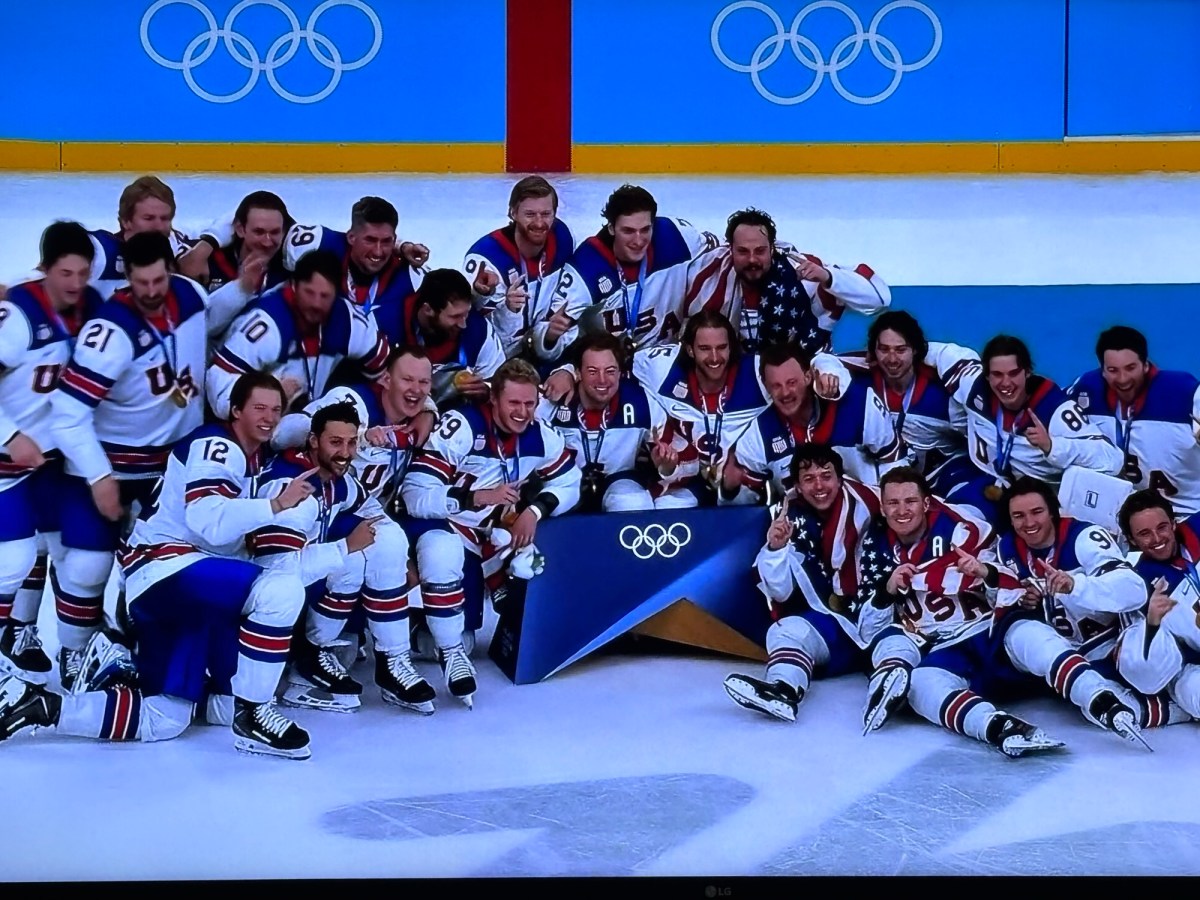
I walked in from the gym and the house was buzzing. The USA men’s hockey team was tied with Canada and heading into overtime for the Gold Medal in the 2026 Winter Olympics. I dropped my bag and joined the crowd in my own living room. Ten minutes later, Jack Hughes took the shot that sealed it. USA. Gold Medal.

Just like that.

It brought me right back to the 1980 “Miracle on Ice” — that scrappy, determined group of young men who captured gold and our hearts at the 1980 Winter Olympics.

Thirty minutes later, there we were — hands over hearts — singing along with the team as the National Anthem echoed through the arena. Their eyes were glassy. So were ours. They represented our country, and in that moment, they made us all stand a little taller.

So if you ask me whether I’m patriotic?

Yes. I am.

No matter who is in charge. No matter the season. No matter the noise.

For me, patriotism isn’t about perfection. It’s about pride. It’s about remembering where we’ve been, honoring those who stood before us, and believing — always believing — that when the drapes open and the flag is revealed, we will still be here.

Standing. Singing. Waving.

Fine Dining

This morning I read a fabulous post from one of my favorite authors, Tracie (please do yourself a favor and visit Squiggle Line Cafe — she’s wonderful). She wrote about lunchboxes from back in the day and just like that, I was transported.

Until Fourth Grade, I was the proud owner of a tin lunchbox featuring The Bugaloos — yes, that Saturday morning masterpiece brought to us by Sid and Marty Krofft. The lunchbox was embossed on the front in all its psychedelic glory. It had a metal hinge and clasp that could be heard opening from the other end of the cafeteria. There was no such thing as a quiet entrance when you carried The Bugaloos.

Inside sat the matching thermos — either filled with Campbell’s soup in the colder months or lemonade when the sun decided to show off. That lunchbox was more than a container. It was a status symbol. A conversation starter. A piece of personality.

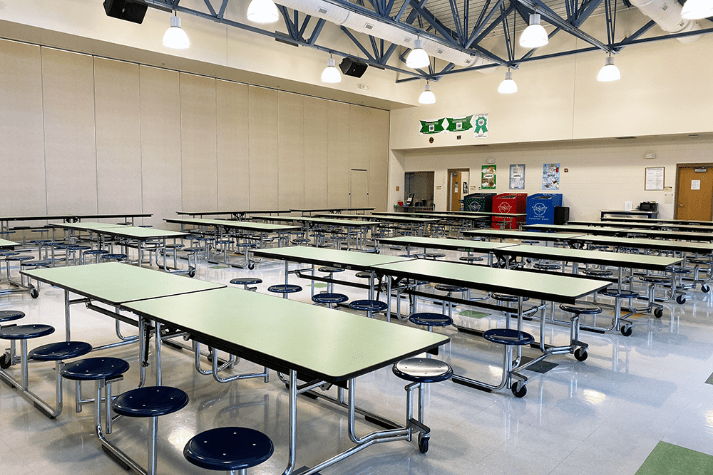
It held a prime seat each day at Central Boulevard Elementary School, where thirty of your closest friends gathered around long tables under fluorescent lighting that did none of us any favors. Before we even took a bite, we would survey the scene. Who had what? Was there a Hostess cupcake in sight? Pretzels? A pudding cup? Occasionally — and I mean occasionally — a coveted trade would take place. Negotiations were swift. Serious. Binding.

And then there were the days when The Bugaloos stayed home at 36 Grant Avenue and I opted for cafeteria cuisine.

Oh, the confidence.

I would waltz right up to the lunch lady in her hairnet as if I had a reservation.

“I’ll have the special.”

Would you like a side salad with dressing, Miss Eastwood?

Why yes. Yes, I would, Mrs. Lunch Lady.

Back then, it felt like a five-star establishment. The round Friday pizza. The mystery-meat Mondays. That iceberg lettuce salad that I can still smell to this day (and not in a good way). But in the moment? It was divine. It was independence. It was grown-up.

Every meal was served on a sturdy melamine tray with tidy compartments — our very own version of a TV dinner. Everything in its place. Orderly. Predictable. Safe.

But nothing — and I mean nothing — compared to what happened when someone dropped their tray.

There was a stainless steel bucket outside the cafeteria doors where you deposited your used tray. Every now and then, someone would misstep. A sneaker would catch. A hand would slip. And down it went.

Crash.

The tray would hit the green tile floor with a dramatic smash, aluminum silverware scattering like confetti. The sound echoed off the walls.

Then came the silence.

Three… maybe four seconds of absolute stillness. A hush so complete you could hear your own heartbeat.

And then—

The eruption.

The entire cafeteria would leap to its feet in thunderous, stadium-worthy applause. The kind reserved for rock stars taking the stage. It was instantaneous and unanimous. A rite of passage. We always felt terrible for the unfortunate soul standing amid the carnage… but the applause? Legendary.

To this day, that memory makes me laugh out loud.

My dining experiences have certainly evolved over the years. I’ve enjoyed meals in beautiful restaurants with linen napkins and candlelight. I’ve tasted cuisine I couldn’t pronounce in cities far from Central Boulevard.

But none of it quite compares to those 42 minutes each school day when food and friendship sat side by side on a plastic tray.

Fine dining, indeed.

Sometimes the best restaurants in the world aren’t the ones with five stars — they’re the ones with fluorescent lights, round pizza, and a standing ovation you never saw coming.

The Governor, Me, and the Ticket

Have you ever unintentionally broken the law?

Many moons ago—back when my calendar was color-coded in highlighter and my car basically ran on Dunkin’ and determination—I served on every PTA board in our school district from 2004 to 2016. Elementary, middle, high school. If there was a bake sale, a budget vote, or a debate about cafeteria pizza, I was there.

It was unpaid. It was exhausting. It was one of the most meaningful seasons of my life.

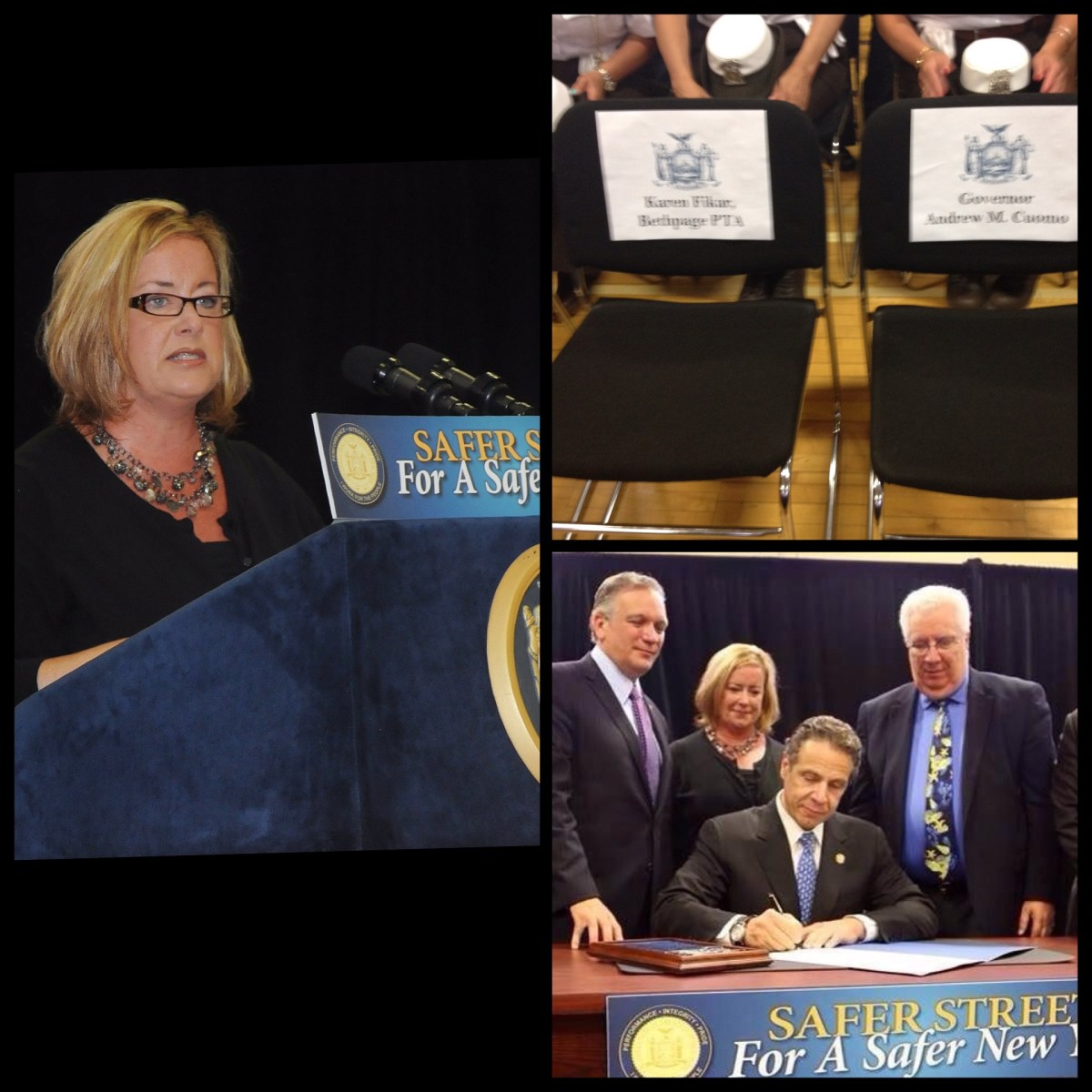
One sunny afternoon in June, my phone rang. It was our district Superintendent. In that tone that says, This is not about pretzel sales, he explained that the Governor of New York would be coming to our district to sign a newly passed bill. The legislation would reduce the speed limit in front of school buildings to 25 mph and install remote cameras in those zones to track speeding.

Safety first. Children first. All good things.

Then he added, almost casually, that the Governor’s office would like the PTA Council President to deliver a short speech in support of the bill.

That would be me.

I said yes before he could finish the sentence. Of course I did. PTA moms don’t say no. We say, “Sure, what time?”

A few days later I arrived at the school and was escorted behind the stage like I was part of a traveling Broadway show. That’s when I was introduced to Andrew Cuomo.

Let me tell you—what a production. Lights. Cameras. Staffers with earpieces. He was polished, charming, larger than life. If you’ve heard stories, let’s just say… yes. That. All of it.

I delivered my speech. I spoke about protecting our children, about the peace of mind parents deserve, about how slowing down for a few seconds could save a lifetime. The bill was signed. Hands were shaken. Pictures were taken. Pomp. Circumstance. Applause.

And then?

I went back to packing lunches and answering emails.

One week later, I grabbed the mail after work. Bills. Coupons. And then—front and center—a crisp envelope from the Town.

A speeding ticket.

For driving 30 in a 25 mph school zone.

Issued in the neighboring district’s school zone.

There I was. On video. Zipping past the school like I had somewhere far more important to be than my own public platform.

I just stood there staring at it. The irony was almost poetic.

I immediately called my Superintendent and said, “Guess who got the first school zone ticket? Me!”

He burst out laughing. I burst out laughing. To this day, years later, when we talk, we still fall down laughing about it.

For the record, I am probably the most conservative driver on the planet. I brake at yellow lights. I wave pedestrians across like I’m directing traffic at LaGuardia. But that June in 2014?

Public enemy number one.

And here’s what I’ve learned: life has a wicked sense of humor. Just when you’re standing at a podium feeling polished and purposeful, it humbles you with a grainy traffic camera photo.

Sometimes you’re the advocate.

Sometimes you’re the example.

And sometimes—if you’re lucky—you get to be both.

Outside Chaos. Inside Calm. 

 The alarm rang at 4 a.m.

I crawled down the hall and popped into the shower. We had planned for this. Pre-op appointments. Ice packs in the freezer. Blankets fluffed and ready. I knew it would be a long day, but I was ready.

Ernie was scheduled for shoulder surgery and we needed to be at the hospital by 6 a.m. Two weeks of preparation finally brought us to this morning.

Last month he fell off the top step on the back patio trying to photograph the Northern Lights. No magical sky pictures. Just a busted shoulder that unraveled the hard-earned success of his second rotator cuff surgery ten years ago. Four pins floating around where they most certainly did not belong.

Some days we are crazed squirrels running in opposite directions looking for car keys and favorite hoodies. But today? Today we were a well-oiled machine. Quiet. Efficient. Focused. We walked out the door like a team that had studied the playbook.

The drive was short, but at 5:37 a.m. the world already felt loud. Horns honking. A couple arguing in the parking lot. Headlights cutting through the early morning gray.

I glanced over at Ernie in the passenger seat. He was tense. And that caught me.

He’s a big guy with nerves of steel. A retired Corrections Officer. A Volunteer Firefighter for over forty years. He’s seen things most of us can’t even imagine. The kind of man who runs toward chaos when everyone else runs away. But surgery? Surgery makes you hand over control. And that’s a different kind of bravery.

The hospital doors slid open and then shut behind us. Outside noise muted instantly.

Forms exchanged. ID badges clipped on. A team of nurses swept in and brought Ern back to the OR prep room. Thirty minutes later they came for me. The anesthesiologist arrived. More forms. More signatures. Finally the doctor walked in — our orthopedist for years now. We’re on a first-name basis. Not exactly a club you want to belong to, but here we are.

Then the nurses walked me back out.

Time to wait.

If there’s one thing I do well, it’s observe. I am a fierce people watcher. I talk to everyone. I listen with my whole body. And as I sat there, here’s what I saw:

Deep compassion.

Outside chaos.

Inside calm.

Every person within those walls moved with purpose but never with panic. They smiled. They touched arms gently while speaking. They made steady eye contact. No rushed glances at phones. No distracted nods. Just honest-to-goodness human interaction.

It struck me.

In a place where fear quietly sits in every chair, kindness becomes oxygen.

No one raised their voice. No one rolled their eyes. They explained things twice. They reassured. They paused. They looked you in the face like you mattered — because you did.

And it made me think — we are capable of this everywhere.

Not just in hospitals. Not just when something is broken. Not just when we are scared.

We can choose calm over chaos.

Connection over confrontation.

Kindness over noise.

Ernie was wheeled back hours later — groggy, stitched, repaired. The surgeon said it went well. Four renegade pins handled. Shoulder rebuilt again.

As we drove home, the morning felt different than it had at 5:37 a.m. Still traffic. Still horns. Still people rushing.

But inside our car?

Calm.

Sometimes healing isn’t just what happens in the operating room. Sometimes it’s what happens in the waiting room. In the quiet moments when strangers show up with compassion and remind you that humanity is still very much intact.

And maybe that’s the solid takeaway.

When the world feels loud, be the hospital hallway.

Be the steady hand.

Be the calm inside someone else’s chaos.

Because kindness — real, eye-contact, hand-on-the-arm kindness — might just be the strongest medicine we have.

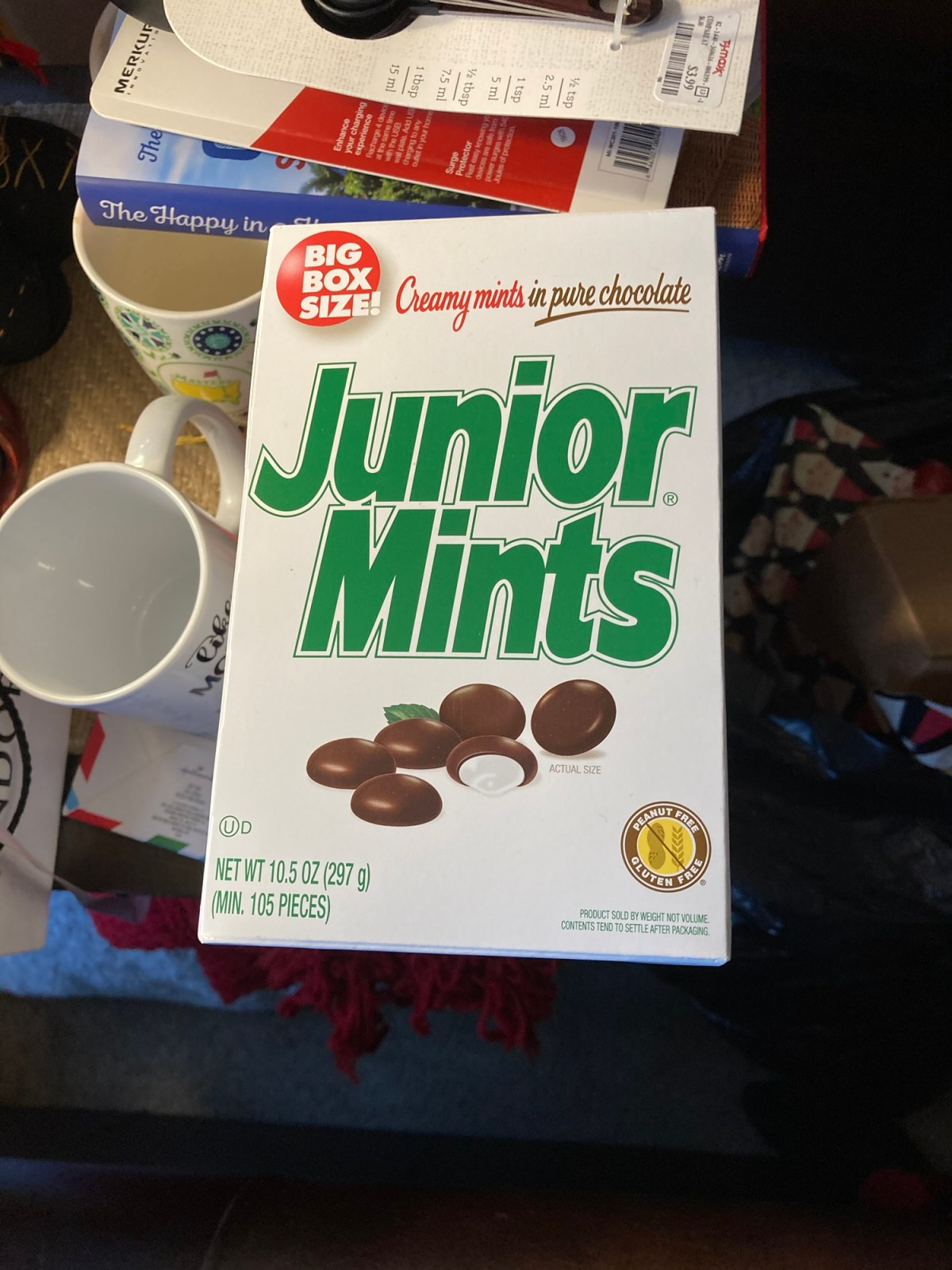
The Junior Mint Moment

What’s your favorite candy?

There are certain candies that don’t just taste sweet—they mean something. They carry memories. Moments. A time stamp on your life. For me, that candy is the Junior Mint.

Chocolate on the outside. Cool mint on the inside. A perfect balance of rich and refreshing. Not loud. Not flashy. Just quietly confident. The kind of candy that doesn’t need to shout to be remembered.

I don’t remember the first Junior Mint I ever had, but I do remember how it made me feel. Like a pause button. Like things were okay, even if just for a minute. There’s something about mint that clears your head while chocolate comforts your soul.

And then there’s Seinfeld.

If you’re a fan, you already know the episode. If you’re not, let me paint the picture. A routine medical procedure. A quiet operating room. And Jerry and Kramer watching from above, snacking on Junior Mints. One slips. It falls. Directly into the patient.

Cue panic. Cue guilt. Cue laughter.

Only on Seinfeld could a piece of candy become a medical plot twist. And somehow—miraculously—the patient improves. The Junior Mint, against all odds, becomes a hero. Not bad for a candy that usually lives at the bottom of a movie theater box.

That episode sealed it for me. Junior Mints weren’t just candy anymore. They were cultural icons. They had range. They had depth. They had a storyline.

But maybe that’s why I love them so much.

Life is a lot like that episode. We’re all sitting in the observation deck, thinking we’re just passing time, tossing candy into our mouths, when suddenly something slips. A word. A decision. A moment we didn’t think through. And it drops right into the middle of something important.

We assume the worst.

But every now and then, that unexpected drop-in doesn’t ruin things. Sometimes it makes things better. Sometimes the mistake heals instead of harms. Sometimes the Junior Mint saves the day.

So yes, I love Junior Mints because they taste good. Because they remind me of movie theaters and sharing a box with someone I love. Because mint and chocolate are better together than they ever were apart.

But mostly, I love them because they remind me that life doesn’t always go according to plan—and that doesn’t mean it’s going wrong.

Sometimes, the thing you never meant to drop ends up being exactly what was needed.

I Like to Say a Prayer and Drink To World Peace”

Albert Einstein famously said that the definition of insanity is doing the same thing over and over again while expecting a different result. I don’t know about you, but I am absolutely guilty of this every so often. I get stuck in a familiar loop, convincing myself, this has to work this time. Same effort. Same approach. Same outcome.

Today is February 2nd — Groundhog Day. The day we collectively wait to see whether a groundhog (most famously Punxsutawney Phil) sees his shadow. Shadow means six more weeks of winter. No shadow means an early spring. This blonde only realized a few years ago that spring technically arrives in six weeks anyway… but traditions are traditions, and here we are.

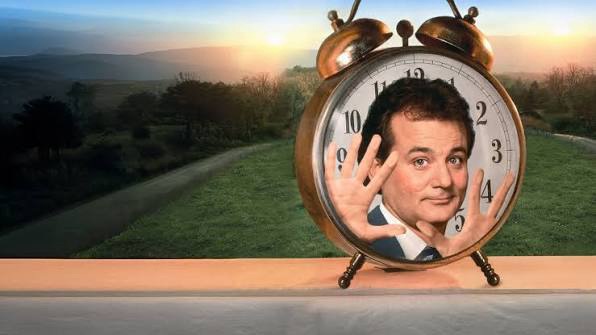
While it’s not an official holiday, February 2nd gave us a gift back in 1993: the movie Groundhog Day, starring Bill Murray as Phil Connors, a cynical local weatherman sent to cover the festivities in Punxsutawney, Pennsylvania. A snowstorm traps Phil and his crew overnight — except Phil doesn’t just spend the night. He ends up reliving the same 24 hours over and over again.

I won’t recount the entire movie here (though I could — it’s firmly in my top five cinematic picks), but what I will say is this: the film is a master class in what happens when we stay the same.

Phil wakes up every morning at 6:00 a.m. to Sonny & Cher’s I’ve Got You Babe. At first, he repeats every move from the day before. Then he starts experimenting. Each new morning becomes a chance to change things — indulgence, arrogance, charm, cruelty, excess. He tries being outrageously rude. He tries being wildly self-serving. He tries manipulating outcomes. Yet no matter what he does — good or bad — the result never changes. He is stuck. Eternally.

As the story unfolds, Phil falls in love with his producer, Rita. Day after day, he learns her likes, her quirks, her values. In one scene, he orders her exact cocktail — knowledge gained from countless previous days — and offers a toast: “I like to say a prayer and drink to world peace.” Rita is stunned by the synchronicity. It feels magical. Meant to be.

But the magic doesn’t actually come from knowing the script. It comes later.

It isn’t until Phil stops trying to control the outcome — stops performing, manipulating, repeating — and starts genuinely changing himself that time finally moves forward. He learns. He gives. He becomes kind without expecting anything in return. He learns to love Rita, yes — but more importantly, he learns to love who he is becoming.

And only then does the alarm clock change. Only then does February 3rd arrive.

That’s the quiet truth hidden inside Groundhog Day: nothing changes unless you change. Not the day. Not the season. Not the outcome. We can wake up to the same song every morning and swear this time will be different — but until we do something differently, until we choose growth over habit, awareness over autopilot, we’ll keep living the same day.

Sometimes the shadow isn’t cast by a groundhog at all. Sometimes it’s our own unwillingness to change.

🟤🟤🟤🟤🟤🟤🟤🟤🟤🟤🟤🟤🟤🟤🟤🟤🟤🟤

Copyright 2026 © mobileorderforkaren All rights reserved. No part of this work may be reproduced, distributed, or transmitted in any form or by any means, including photocopying, recording, or other electronic or mechanical methods, without the prior written permission of the author, except in the case of brief quotations used in critical reviews or scholarly work. This work is protected under domestic and international copyright laws. Unauthorized use or reproduction of this material is strictly prohibited and may result in legal action.

Drop Back and Punt

It’s easy for any one of us to get caught up in the thick of things. A conversation. A situation at work. Bad news. Or sometimes, oddly enough, a string of good things happening too fast. Life gains momentum and suddenly we’re sprinting without realizing we’ve lost our footing. Before we know it, we’re stuck in a full-blown Lather. Rinse. Repeat. loop—reacting instead of responding, running plays that aren’t getting us anywhere.

I was having a conversation with my son yesterday when I could see his mood starting to tilt toward that familiar cliff of anxiety. His words came faster. His breathing shortened. I could almost hear his heart racing ahead of him. As expected, his voice began to rise. I remember thinking, Well, that escalated quickly.

And then—clear as day—I heard my father.

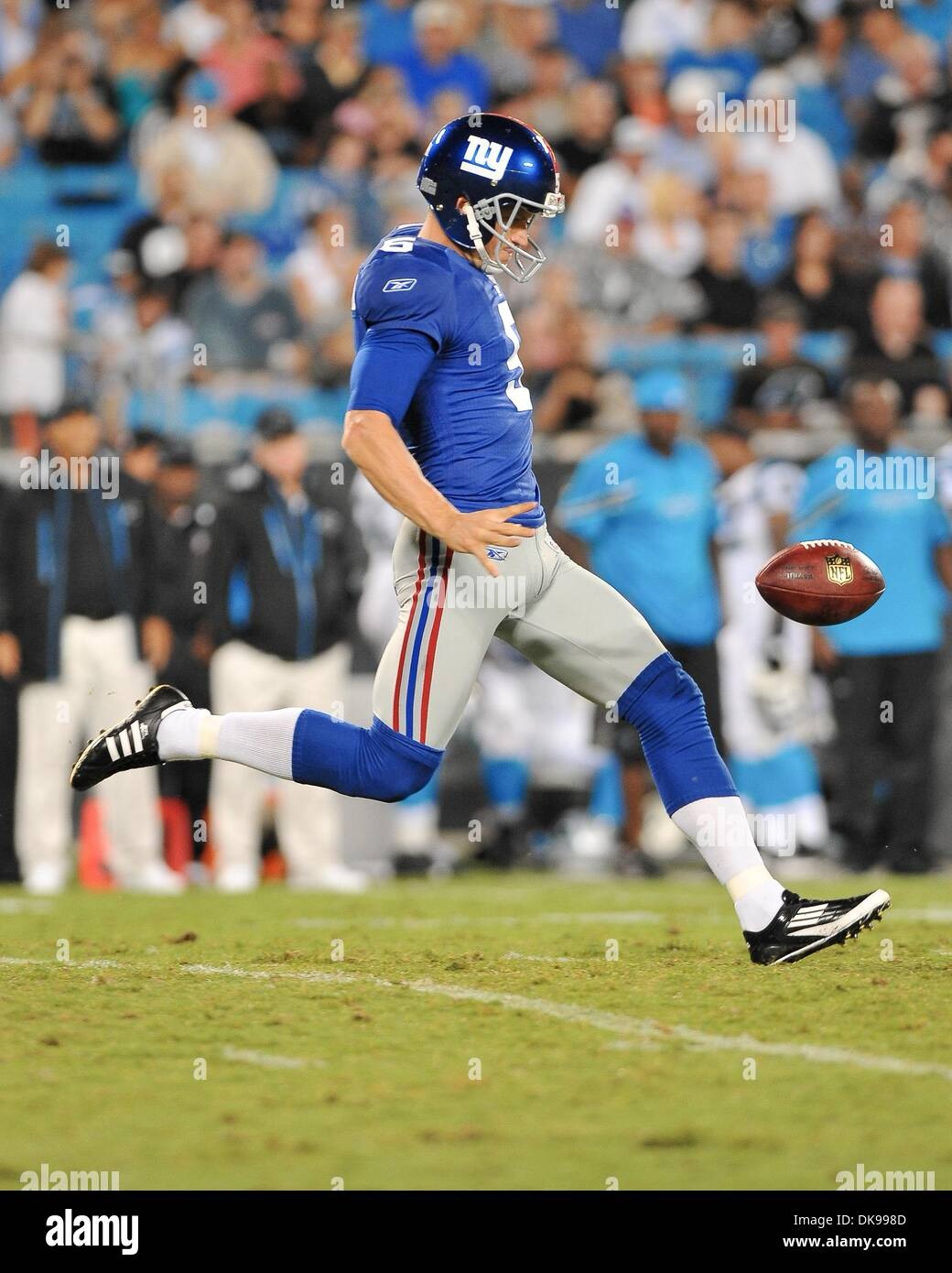
“Drop back and punt, Karen Anne.”

Now, I don’t know if it was my dad’s presence slipping quietly into the room—he left us two years ago yesterday—or just one of those instinctual mother moments where memory and muscle reflex collide. Either way, there it was. One of his Spitballs of Knowledge, perfectly timed.

My dad was famous for them. He had a deep bullpen of phrases and adages he rotated through our lives, always uncannily tailored to the exact moment we were in. “Drop Back and Punt” was a big one. We watched the New York Giants with him every Sunday from the time I was… three? Four? Football wasn’t just a game in our house—it was a language. We knew the plays, the rhythm, the patience required when a drive wasn’t going your way.

To my dad, “Drop Back and Punt” literally meant this: stop. Take two or three steps back—no more, that’s all the NFL allows—and punt the ball. Give yourself space. Reassess. Change the angle. Clear the field so you can regroup and move forward with intention instead of force.

That message—along with so many others—carried us through some pretty wacky moments, and some very serious ones too. It showed up in boardrooms, family kitchens, hospital waiting rooms, and long car rides where the answers weren’t obvious yet.

Yesterday, my son took that golden nugget from his grandfather and ran with it. He slowed his breathing. His shoulders dropped. The field opened up. Calmness replaced chaos.

And in that moment, I realized something: maybe my dad never really left the game. Maybe he just moved upstairs to the coaching booth. Quietly calling plays. Stepping in as Offensive Coordinator exactly when we need him. Reminding us that not every moment is meant to be charged ahead—sometimes the smartest move is to drop back, punt, and trust that there’s another drive coming.

🏈🏈🏈🏈🏈🏈🏈🏈🏈🏈🏈🏈🏈🏈🏈🏈🏈🏈

Copyright 2026 © mobileorderforkaren All rights reserved. No part of this work may be reproduced, distributed, or transmitted in any form or by any means, including photocopying, recording, or other electronic or mechanical methods, without the prior written permission of the author, except in the case of brief quotations used in critical reviews or scholarly work. This work is protected under domestic and international copyright laws. Unauthorized use or reproduction of this material is strictly prohibited and may result in legal action.