Do you remember life before the internet?
I don’t know if any of you are involved with Pinterest the way I am, but there isn’t a day that goes by where I’m not clicking, scrolling, saving, or searching for dinner ideas I’ll probably never actually make. For me, it’s the world’s biggest rabbit hole. One minute I’m looking for a chicken recipe and forty-five minutes later I’m emotionally invested in a woman restoring a farmhouse in Idaho while organizing her pantry in matching glass jars.
But Pinterest reminded me exactly how I should answer today’s prompt.
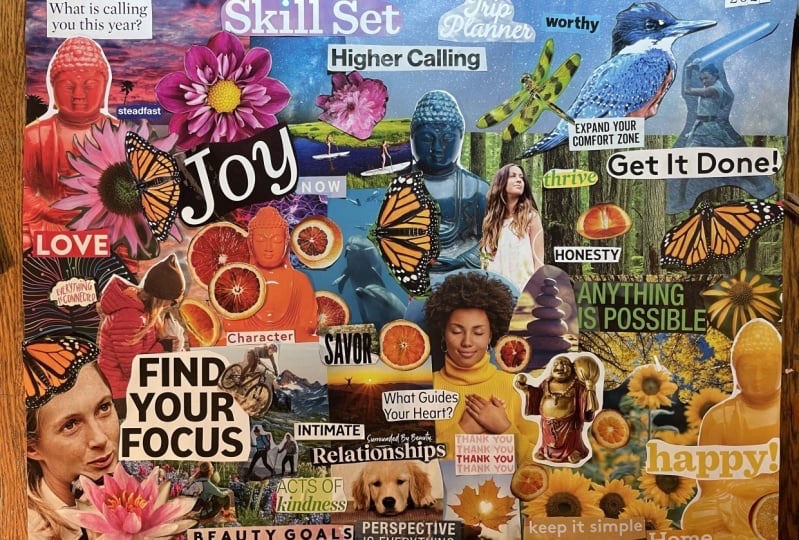
Today, Pinterest exists with flash messages, recipes, advertisements, and perfectly curated outfits worn by people who somehow never spill coffee on themselves. You can “pin” your likes to boards and pages you create. It’s basically a virtual vision board.
“Back in the day” — and you all know how much I love that phrase — my vision board was very real and very oversized. It lived on the wall of my bedroom at 36 Grant Avenue. I covered a giant corkboard with magazine cutouts attached by brightly colored pushpins. I cut out letters from magazines like I was preparing a kidnapper’s ransom note just to label sections of the board. There were concert ticket stubs, wrinkled boarding passes from family vacations, doodles born out of boredom during math class, dance wristbands, and newspaper clippings featuring my Kickline performances or Track Team racewalking results.
My entire life — and the life I hoped to create — lived on that board.
It hung above my prized stereo system, which took up nearly as much emotional real estate as the corkboard itself. I never wanted a Sweet 16 party, so my parents bought me a stereo setup instead. Best decision ever. I could disappear into music for hours while lying on the shag carpeting in my room or French braiding my hair before school each morning. That stereo was therapy before we called things therapy.
The stereo and my portable transistor radio also doubled as my pre-internet mix tape headquarters. I was an absolute professional at recording songs off the radio. I knew every DJ’s rhythm and signature lines. I could sense the exact second they were about to “hit the post” and stop talking right before the lyrics started. That was my cue to slam down the record button.
Young friends, this was our playlist creation process. This was iTunes before Apple even knew what iTunes was.
And then there was the view from my parents’ bedroom window overlooking the block. That was my social media feed. We had thirteen kids living on our block and from around 7:30 in the morning until well after dark, somebody was outside. Bikes were scattered across lawns. Kickball games erupted without warning. Somebody was always crying over something dramatic and life-altering like who slept over whose house the night before.
There was early girl drama long before group chats existed. Who slept at Mary’s house without inviting me? Why were Debbie and Kathy sleeping at my house while Mary and Peggy were left out? Every day brought a new emotional scandal worthy of a daytime soap opera.
Honestly, it was Facebook before the World Wide Web.
Painful as those years sometimes felt, I can say with complete certainty that I probably would not have survived my later high school years had social media existed the way it does today. There. I said it. Living inside the small protective bubble of my little neighborhood gave me room to grow up quietly. Mistakes disappeared by the next morning instead of living forever online. Embarrassing moments weren’t recorded, reposted, analyzed, and commented on by strangers.
We lived our lives in real time, not highlight reels.
And for that, I’m deeply grateful.
There’s something beautiful about having memories that only exist in stories, ticket stubs, faded photographs, and corkboards covered with dreams. Nothing was curated back then. We were just kids trying to figure ourselves out one mix tape, one sleepover, and one pushpin at a time. Maybe that’s why those memories still feel so alive to me. They weren’t created for an audience. They were simply lived.

